



Diagnostic Approach
The BI(G)MED diagnostic approach involves tracing a pathology back to its origin by precisely analyzing the functioning of the immune system.
A detailed and precise picture of the immune system via lymphocyte typing and protein profiling
The immune system is on the front line against external or internal disturbances and aggressions. In cases of infection or allergy, the involvement of the immune system is undeniable, as its defense mechanisms deploy visibly and directly. However, it is equally involved, though more subtly and sometimes less intuitively, in processes such as autoimmune diseases, cancers, metabolic disorders, and certain neurodegenerative pathologies.
Our immune system is composed of a very large number of cell populations, including T lymphocyte subpopulations (CD4+, Th1, Th2, Th17, CD8+, Treg…), B lymphocytes, and Natural Killer (NK) cells.
The development of laboratory techniques such as flow cytometry allows for the characterization and quantification of these different lymphocyte subpopulations in a blood sample.
This is known as lymphocyte typing. It is central to the practice of the BI(G)MED therapist.
The interpretation of this assessment allows, among other things, to detect very precisely and sometimes early:
- The presence of a chronic infection and to differentiate if it is viral or bacterial
- An allergic profile
- An autoimmune process (even asymptomatic)
- Cellular hyper-proliferation associated or not with an already detectable tumor
In conjunction with this lymphocyte typing, the BI(G)MED therapist prescribes a protein profile, which provides information on the functioning of the humoral immune system and inflammation.
Inflammation is an essential physiological response, designed to protect the body against aggressions. While beneficial and restorative in the short term, its persistence or dysregulation becomes a key factor in the onset and progression of many pathologies.
It is found at the heart of autoimmune diseases, cancers, metabolic disorders, and also in neurodegenerative processes.
Chronic inflammation acts as a common thread connecting seemingly very different diseases, by modifying the balance of the immune system and cellular metabolism.
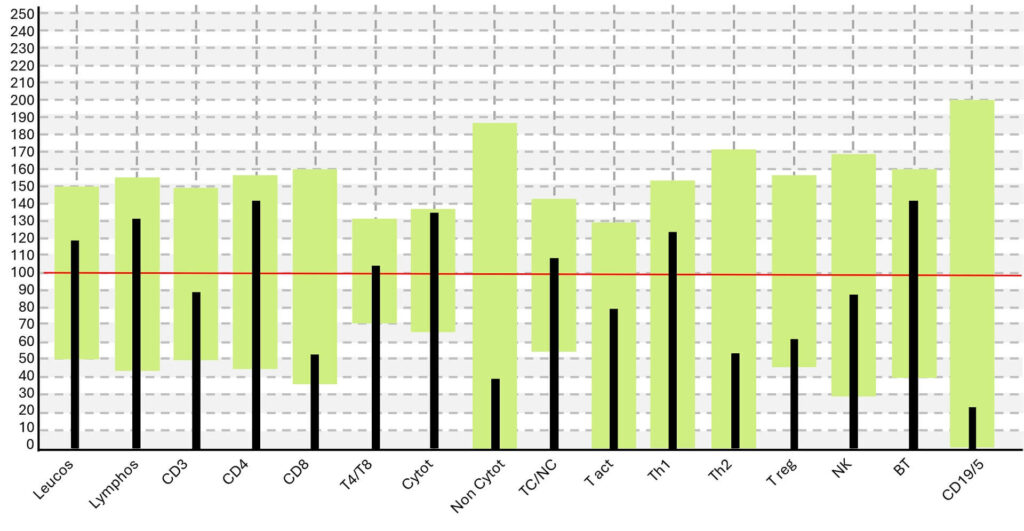
Example of lymphocyte typing.
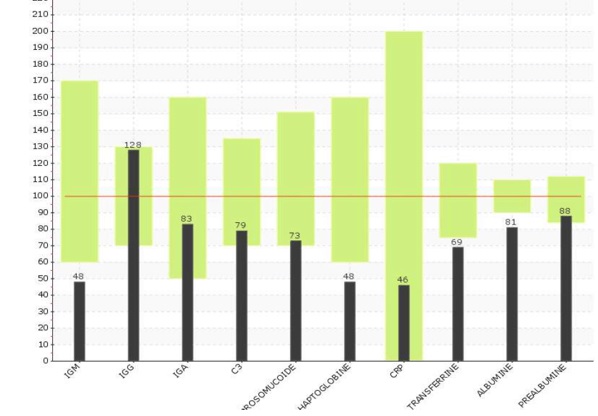
Example of protein profile.

Are you a physician and wish to train in the interpretation of lymphocyte typings and protein profiles?
Pathogen research
The BI(G)MED diagnostic approach involves tracing a pathology back to its origin, meaning to the factors that triggered it, without merely treating symptoms.
However, many chronic diseases (cancer, chronic fatigue, fibromyalgia, or other autoimmune diseases) are linked to chronic infections triggered by certain pathogens such as viruses, bacteria, or fungi.
Thus, in the BI(G)MED approach, serologies are almost systematically prescribed. However, differentiating between a serological profile suggestive of immunity or reactivation is not always straightforward.
All BI(G)MED therapists trained by EBMA are able to determine if it is a reactivation that could be responsible for a chronic pathology and to offer treatments to restore an effective response against these microbes.

Some associations between pathogens and chronic diseases
Borrelia and Chronic Lyme
Chronic Borrelia infection, known as Chronic Lyme, whether post-antibiotic therapy or not, affects more than 10% of people. It can affect the brain, heart, and central nervous system, causing cognitive disorders, mental illnesses (such as depression, anxiety, and psychosis), chronic pain, and fatigue.
EBV and Autoimmune Diseases
The Epstein-Barr virus (EBV), responsible for infectious mononucleosis, is also known to persist lifelong in B lymphocytes. It can then disrupt the immune system and cause a large number of chronic pathologies. It is therefore very important, when faced with an autoimmune disease or leukemia, to investigate whether this virus is reactivated.
Sars-Cov2 and Long Covid
The Sars-Cov2 virus, responsible for the COVID-19 pandemic, has proven, beyond its acute pathogenicity, capable of inducing chronic manifestations many years after infection. It is now estimated that 4% of the French adult population (more than 2 million people) suffers from Long COVID.
Targeted Genotyping
We are not all equal when it comes to disease risk. With identical lifestyles and risk factors, our genes can provide us with protection or, conversely, an increased risk for a given pathology.
Single gene polymorphisms (SNPs), unlike pathogenic mutations, generally do not destroy a gene’s function but modulate its efficiency, stability, or expression conditions.
SNPs thus define a functional potential, a zone of tolerance within which the cell can adapt. Under favorable conditions, this potential is sufficient to ensure normal function. Under chronic stress, it can become limiting. The pathology then does not result directly from the SNP, but from the inability of the regulatory system to sustainably compensate for this constraint.
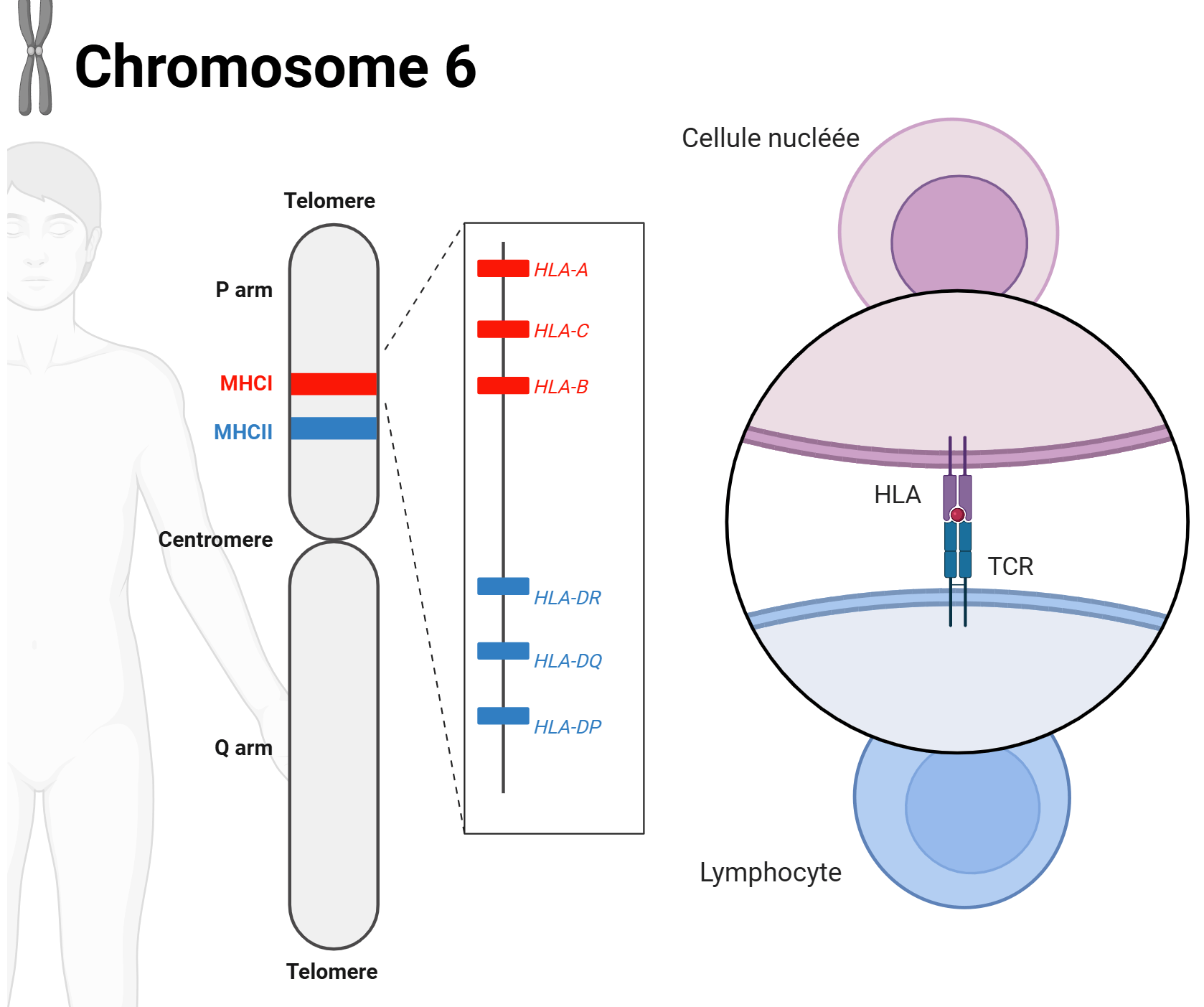
The essential role of the MHC (Major Histocompatibility Complex, also called HLA (Human Leukocyte Antigen) in humans) in susceptibility to autoimmune diseases is also well known. The association of HLA-B27 with ankylosing spondylitis, HLA-DR2-15 with multiple sclerosis, or HLA-DR3 in type 1 diabetes is widely documented.
Determining a person’s HLA not only allows for the implementation of preventive measures but also therapeutic ones, since BI(G)MED allows for the regulation of HLA to restore adequate self and non-self recognition by the immune system.
Your questions about the BI(G)MED diagnostic method
Why lymphocyte typing for a medical diagnosis?
Lymphocyte typing provides a detailed overview of the immune system’s functioning. It is much richer than a standard blood count.
- It is useful for prevention to control any emerging immune disturbance that could lead to a pathology.
- It helps identify if the immune system is facing a chronic microbial infection and characterize its response.
- It is also capable of detecting if an autoimmune or hyper-proliferative process is at work.
- Finally, it is a valuable tool for evaluating the patient’s response to BI(G)MED treatments.
Why serologies?
In the BI(G)MED approach, we seek to trace the origin of the disease. In many cases of chronic diseases, serologies help identify a viral reactivation or the presence of a bacterium or fungus that disrupts the proper functioning of the immune system. Treating this infection then helps restore the body’s homeostasis.
Why HLA genotyping?
HLA is the identity card of our cells, allowing the immune system to differentiate between self (a healthy cell) and non-self (an infected or cancerous cell).
Sometimes, HLA carries an allele susceptible to making it recognize healthy cells as non-self cells. It will then attack these cells and disrupt the proper functioning of the organ from which they originate. With BI(G)MED, the self and non-self recognition system is regulated.
I am a physician, can I get help interpreting the assessments?
The EBMA association provides its members with various spaces to exchange with colleagues or experts to support you in your BI(G)MED practice.
I am a patient, where can I find a doctor to prescribe these analyses?
To find the list of BI(G)MED therapists in your region, please contact our association.
-
Therapeutic approach
The therapeutic approach of BIG(G)MED is to regulate gene expression to enable the body to return to the path of self-healing. -
The BI(G)MED Approach
BI(G)MED is a comprehensive medical approach that coherently combines precision diagnosis and personalized therapy.