



Cellular Self-Regulation and Homeostasis
Our body is constantly adapting to our activity (wakefulness/rest, digestion, stress) and to environmental factors (climate, pollution, microbes).
Homeostasis is the body’s ability to adapt to environmental changes in order to maintain its internal balance.
Gentle Cellular Harmony
Cellular self-regulation is a key element of homeostasis. It refers to the internal mechanisms by which a cell adjusts its own functions, such as protein synthesis or metabolism, to respond to external or internal stimuli. This form of cellular “intelligence” ensures fine and reversible adaptation, essential for preserving the body’s health and supporting repair processes in case of external aggression.
Epigenetic mechanisms (such as DNA methylation, histone modifications, or regulatory RNAs) directly intervene in this process, by modulating gene expression without altering the DNA sequence.
And when harmony is lost?
However, these self-regulation mechanisms can become defective and no longer allow the body to respond adequately to stimuli, leading to cellular dysfunction and paving the way for disease.
The objective of BI(G)MED is to restore the body’s self-healing capabilities by providing cells with the necessary information to stimulate adaptive self-regulation mechanisms.
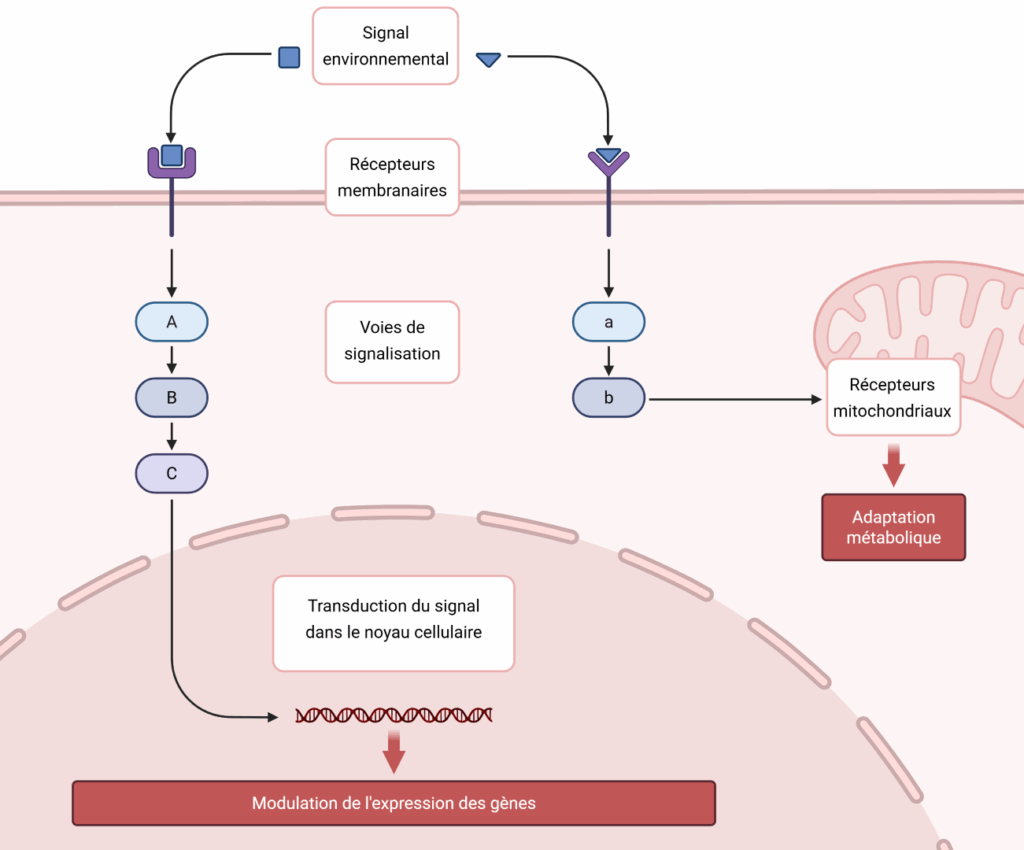
Cellular Self-Regulation
Cellular self-regulation refers to the ability of cells to maintain a stable internal balance despite fluctuations in their environment.
It is based on:
- Detection systems: molecular sensors identify variations (temperature, pH, nutrient availability, etc.) or aggressions (microbes, allergens, etc.).
- Signaling pathways: intracellular signaling cascades rapidly transmit information to adapt the cellular response.
- Correction mechanisms: once the perturbation is identified, the cell activates corrective responses, such as the production of specific proteins, the elimination of excess molecules, or the adaptation of its metabolism.
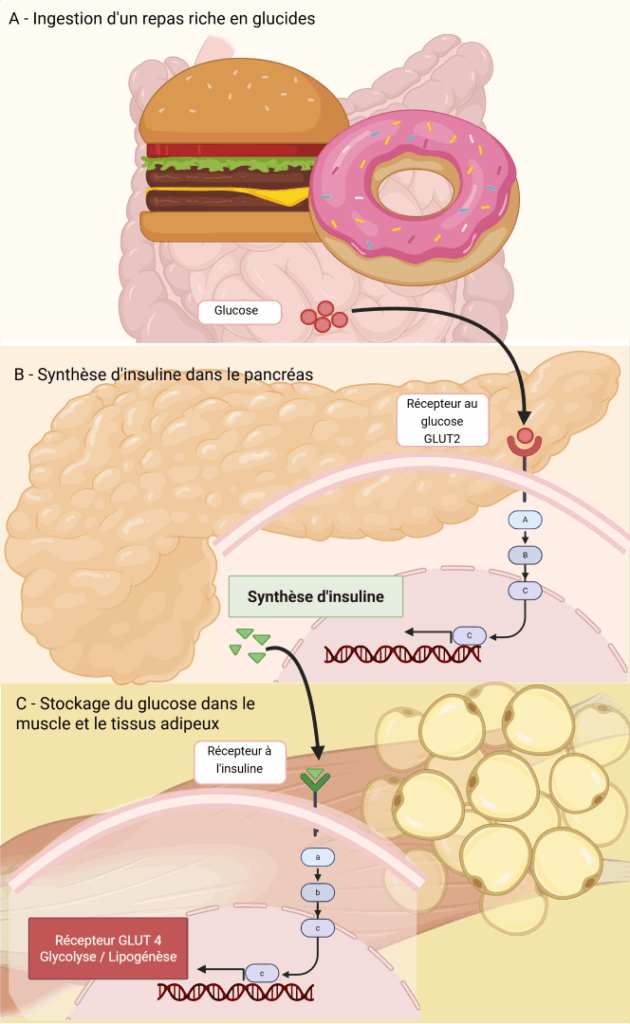
Example: How do our cells adapt to a carbohydrate-rich meal?
After ingesting a carbohydrate-rich meal, the increase in blood glucose is detected by pancreatic beta cells via GLUT2 glucose receptors. This leads to insulin synthesis.
This insulin is in turn detected by insulin receptors on smooth muscle cells and adipose tissue, leading to the synthesis of GLUT4 glucose receptors and enzymes involved in glycolysis and lipogenesis.
-
Epigenetics and Non-Coding RNAs
Epigenetics encompasses all processes that modify gene activity without changing the DNA sequence. -
Biomimicry and Ultra-Low Doses
Bio Immuno(G)enetic Medicine draws inspiration from fundamental biological processes to restore immune balance. -
What is Bio Immun(G)ene Medicine?
BI(G)MED stands for Bio-Immuno(G)enetic Medicine. This innovative medical approach aims to restore the natural self-regulation of cells.